SymEx-VP
SymEx-VP focuses explicitly on testing software for constrained embedded devices (e.g. as used in the Internet of Things). This software often interacts very closely with low-level hardware peripherals and in order to support these interactions, during simulation-based software testing, SymEx-VP supports SystemC peripheral models. SystemC is a C++ class library for modeling hardware peripherals.
MLonMCU
While there exist many ways to deploy machine learning models on microcontrollers, it is non-trivial to choose the optimal combination of frameworks and targets for a given application.
Thus, automating the end-to-end benchmarking flow is of high relevance nowadays. MLonMCU allows performing complex benchmarks of edge ML workloads, frameworks and targets with minimal efforts
Apache License 2.0
UMA: Universal Modular Accelerator Interface
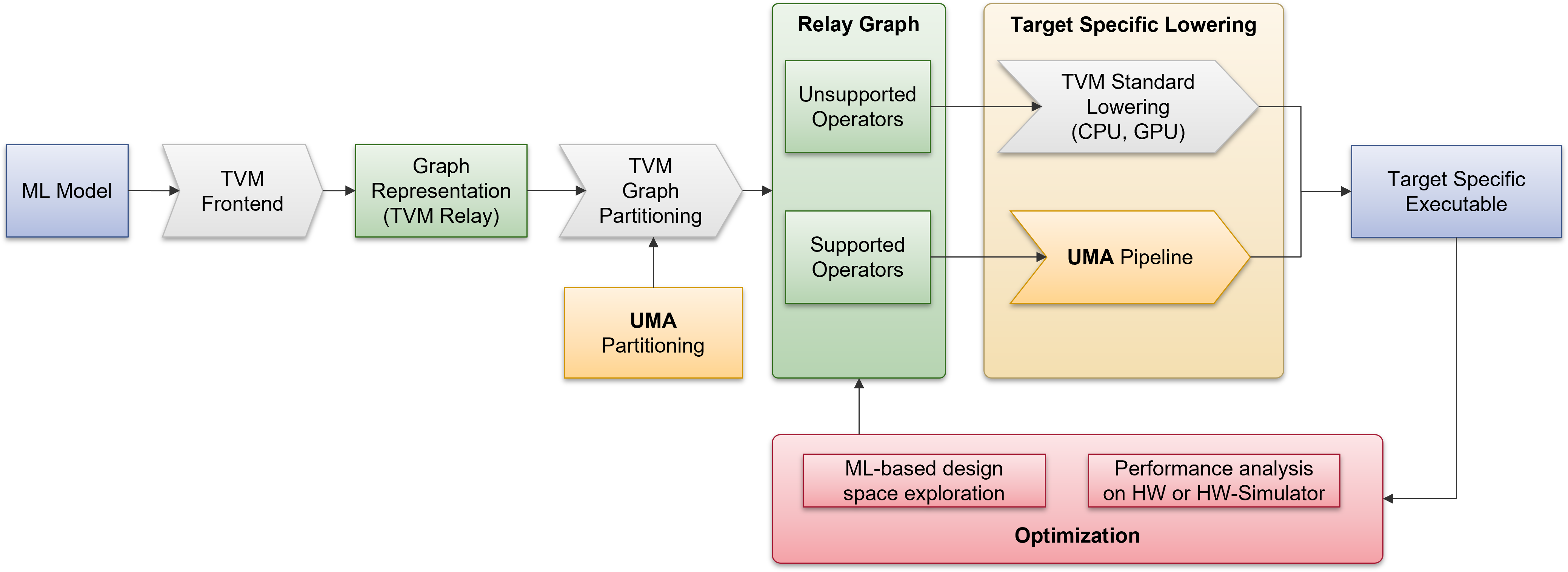
UMA (Universal Modular Accelerator Interface) is a unified infrastructure for easy integration of external hardware accelerators into the machine learning compiler framework TVM. UMA provides file structures, Python interface classes and a documented API and is available open-source in the latest releases of TVM.
Apache License 2.0
Fault Effect Simulation and Analysis for RISC-V (FEAR-V)
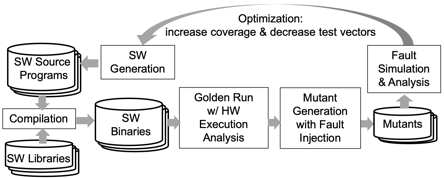
FEAR-V is a fast scalable simulation and analysis framework for RISC-V architectures based on QEMU. The generation, simulation, and analysis can be scaled by ISA configuration as well as n-bit permanent and transient faults. The fault injection covers GPR, CSR, instruction, and memory analysis.
The source code of FEAR-V is freely available with all its components and has been published under https://github.com/hni-sct/fear-v.
Drawing Engine Nlview
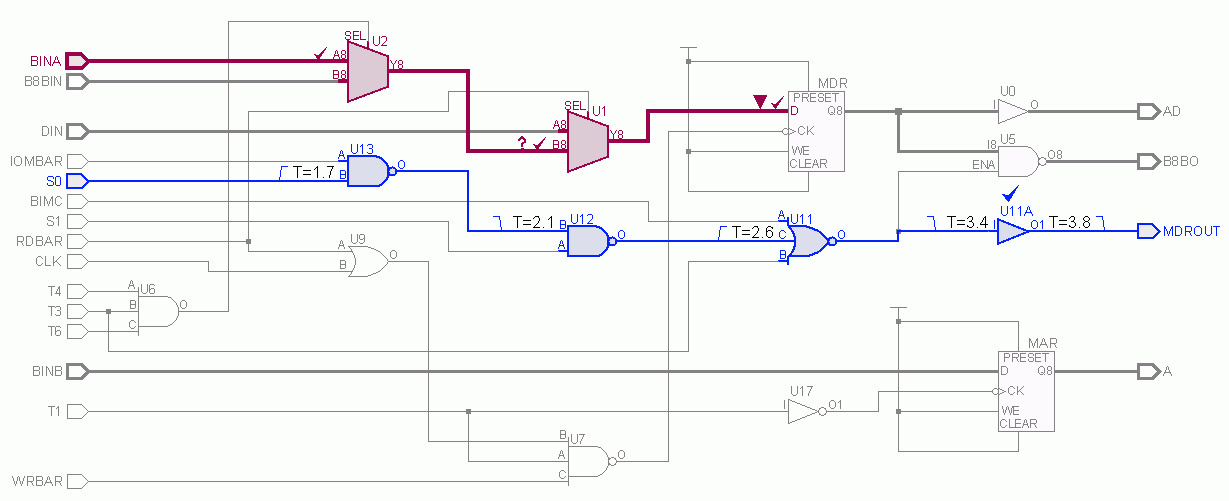
Altair Engineering's Nlview® engine provides automatic generation of interactive schematic diagrams for different levels of electronic circuits, including gate-level, RTL and block-level. Optional engines are available for the system-level (S-engine), for the transistor-level (T-engine), and for automotive and aerospace applications (E-engine).
Commercial licenses can be obtained from Altair Engineering.
FreiTest
FreiTest (developed from PHAETON) is an ATPG (Automatic Test Pattern Generation) Framework based on SAT-Solving (Boolean Satisfiability Problem) and BMC (Bounded Model Checking). It generates full-scan / sequential test patterns and Software-Based Self-Tests (SBSTs) for synthesized circuits using the Validity Checker Module (VCM) specification mechanism.
tflite_micro_compiler
Generate tflite micro code which bypasses the interpreter (directly calls into kernels)
Basically this code uses a fully set up tflite micro instance to dump the internal allocations and function calls assigned to the model, then dumps the tensor and node settings into a compilable file, eliminating the need for running the interpreter at each program start and for resolving the correct kernel at run time.
Apache License 2.0
Hardware Architectures and EDA Tools for Creating and Integrating RISC-V ISA Extensions (ISAX Tools)
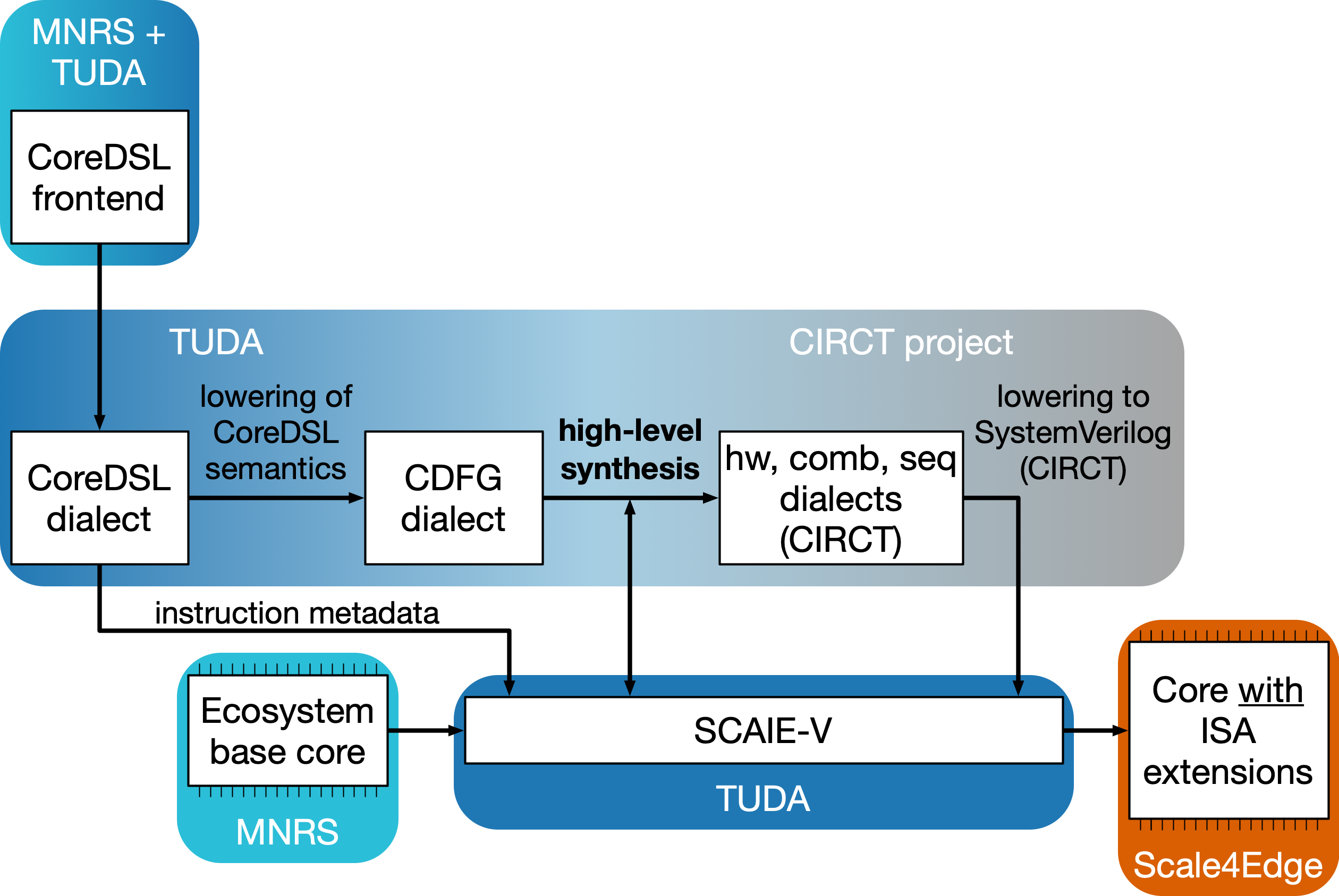
Instruction Set Architecture eXtensions (here abbreviated as ISAX), sometimes also known as Custom Instructions, are one of the key means to specialize a processor for a specific application domain. They enable, e.g., higher performance or better energy efficiency than realizing the applications using just the generic, general-purpose instruction set.
In Scale4Edge, TUDA works on three key technologies aiming to ease the development and deployment of ISAX:
SCAIE-V and CoreDSL have been open-sourced under a permissive license. Longnail remains proprietary to enable commercial exploitation after the end of Scale4Edge Phase 2.
Extensible Compiler (X-LLVM, Seal5)
The Extensible Compiler provides an LLVM-based toolchain to develop C/C++/Assembly programs for RISC-V. It is designed to easily accommodate custom extensions to the RISC-V ISA by supporting the Scale4Edge developed CoreDSL for describing ISA extensions.
Apache License 2.0
A permissive license whose main conditions require preservation of copyright and license notices. Contributors provide an express grant of patent rights. Licensed works, modifications, and larger works may be distributed under different terms and without source code.
aiT and StackAnalyzer for RISC-V
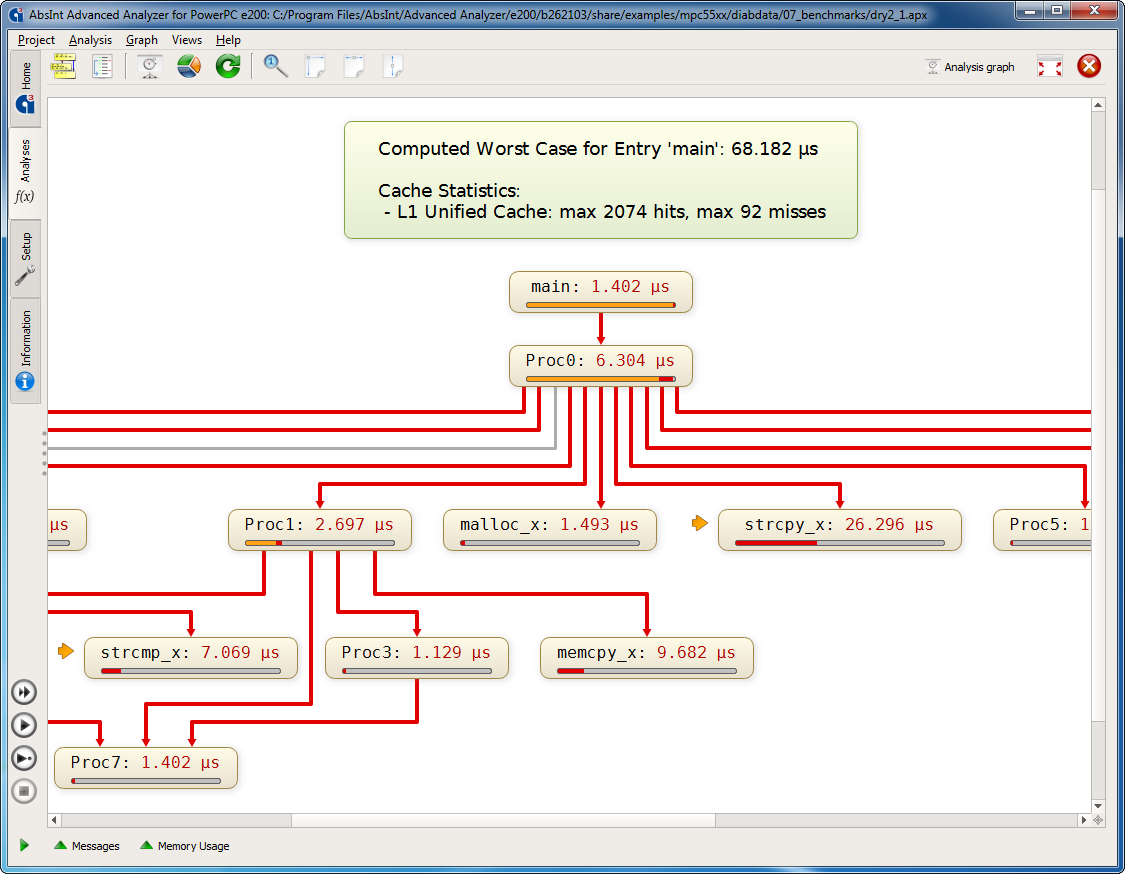
aiT automatically computes safe bounds for the worst-case execution time of tasks in binary executables, taking into account the cache and pipeline behavior of the processor in question.
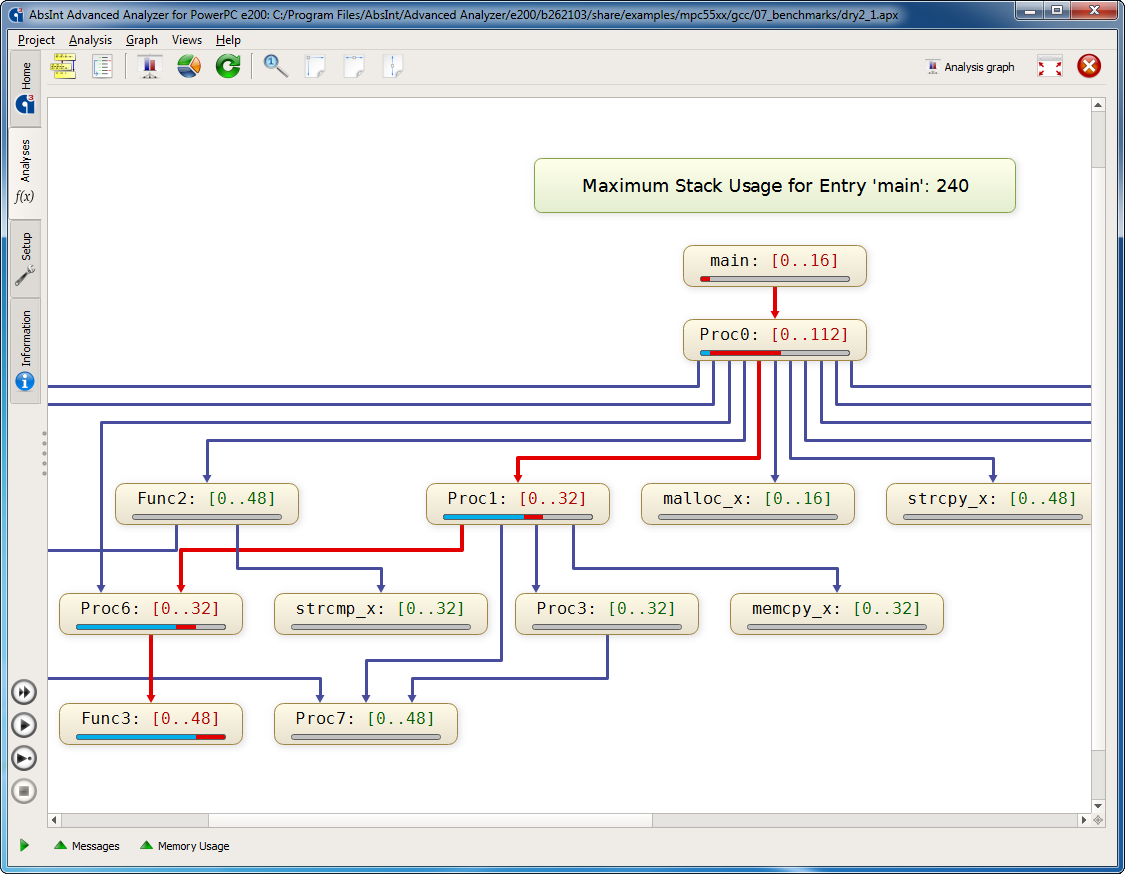
StackAnalyzer automatically determines the worst-case stack usage of the tasks in embedded applications. It directly analyzes binary executables and considers all possible execution scenarios.
This distribution of aiT and StackAnalyzer can be used for evaluation and research within the Scale4Edge project, but not for commercial purposes (see also the license information in the installation packages). Evaluation licenses and commercial licenses can be obtained from AbsInt.